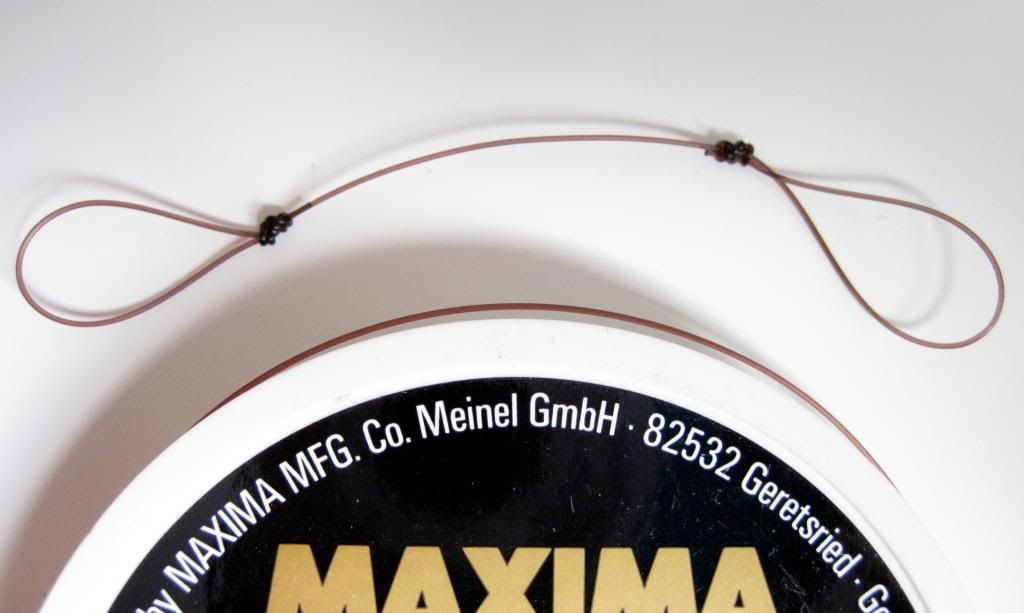
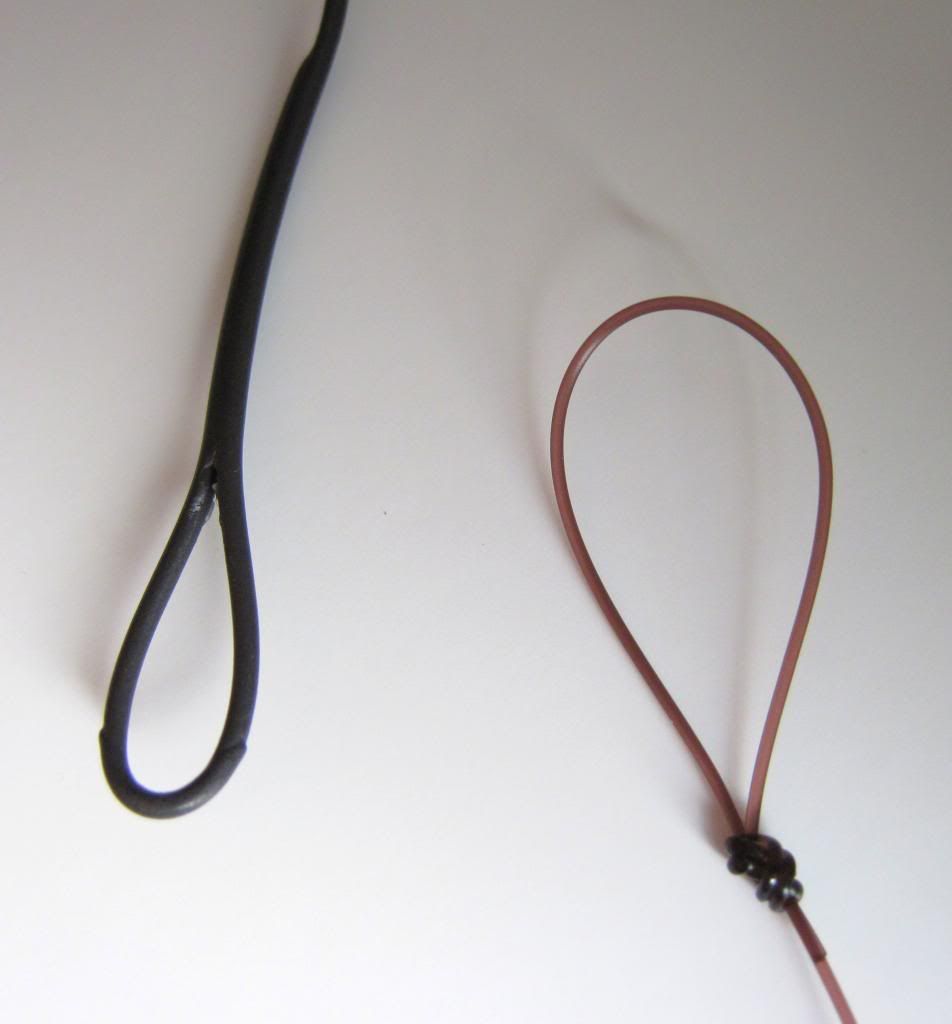
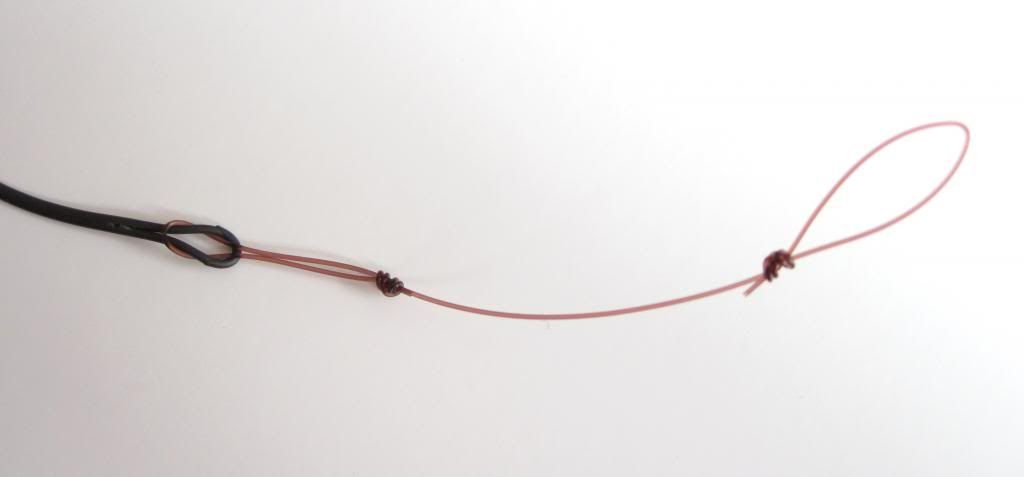
This simple little junction made from 25 lb. or 30 lb. test Maxima can help protect the factory loops on the end of polyleaders, MOW tips or other sink-tips. Just cut a 12 inch piece of the Maxima and tie a double surgeon's loop at either end so you end up with a "junction section" that is about 3-4 inches long.
When swinging flies I like to attach a tippet of 10 lb. test Maxima ultragreen to the end of my MOW tips by making a double surgeons loop and looping it to the loop on the tip. But this relatively thin mono can cut into the factory loop on the sink-tip and shorten its life.
The solution is to make a short junction of heavier mono (25-30 lb. test) which will protect the factory loop from excessive wear. Then you just loop your lighter tippet to the end of the "junction section".
Showing posts with label Tips. Show all posts
Thursday, November 29, 2012
Thursday, April 28, 2011
Spring Time High Water Fishing
We all know its going to happen, it’s just a matter of when. Hopefully sooner in the season then later. Some of my best springtime days have been in really big water and this year we sure have had some crazy flow rates. Fishing big water is not as intimidating as it may look, but safety must be the number one concern for Anglers.
Lets break the river down to find fish in high water. Obviously this is not easy but we can narrow it down quickly. The heavy river current will push fish out of there normal holding spots and force them to the soft pockets along the riverbanks. By skipping over the pools and deep water you have eliminated 90% of the river. Now spend your time fishing the other 10% of the river. With the fish hugging the riverbanks they will find there way up the diversions and side channels, some of the side channels on the Salmon River a plenty big enough to swing flies in. With Steelhead holding along the riverbank approach the river with caution, start fishing at your feet (on the bank). The number one mistake that most anglers make is to reach the river and wade out over the knees. If the spawn has begun even in very little visibility Steelhead have a habit of giving themselves away. Look for a cloud of mud, this can give away an active spawning female on a redd or dark shadows on the bottom, fish for the active males downstream of the female. These males are very territorial and will smash large flies that pass in front of them. Fish will also hold on the inside seams of corners, in front of diversions and below a point of an island where the water forms a "V" in the current. Look for a current break below fallen tree's (Ellis Cove is a good example).
You can beef up your tackle in the big water, Steelhead are not going to be line shy now, 12lb to even 15lb Maxima wouldn't be to heavy for high colored water. Just because the water levels are high doesn't mean you need to fish heavier tips either. You are fishing soft slower water now, Having a fly with a big profile and alot of movement, fished very slow is the ticket for for success.
So the next time the rivers go high and off color don’t be intimidated, go fish! Just breakdown the river and remember safety is the number one priority.
Wednesday, December 22, 2010
Stay Committed
Over the last month I have guided a lot of people new to spey casting and spey fishing. Trying to convert yourself to getting a steelhead on the swing when your fishing buddies are fishing with other techniques and catching all the fish is tough. You need to stick with it and commit yourself; it will all come together in time. You can catch 20 steelhead under a float and a bead, every drop of the float is the same, not one really stands out. You get 10 takes on the swing with a tight line to the fly and you remember every awesome grab, granted swinging flies isn’t a numbers thing but you can very successful even in 33 degree water.
![]() |
| Sticking too it |
Friday, September 10, 2010
Swinging for Kings
Swinging for Kings:
Cast across and slightly downstream - This will give plenty of time to mend and get the fly down for that long, slow swing. I like to cast right across, throw a upstream mend and with the rod tip raised up, slowly back the fly down til it starts to swing (gives the fly that plugging appearance, backing down in front of them).
Throw a big mend upstream - Kings like the fly slow, a big upstream mend will slow the fly down and help get the fly in their face.
Don't set to early - The classic King take feels like, Headshake....Headshake..............Pull... Wait for the pull before you set the hook. If the King immediately starts screaming line off your reel, you don't need to wait, it's game on.....
Put the Boots to 'em - Once you set the hook and the game has begun, after that first run, fight them hard. If your not working, they are resting. The longer the fight, the more chance they will get off.
Wednesday, July 14, 2010
Managing Running Line - Simple Tips
When using Skagit spey lines – short, heavy heads connected to a running line of one type or another – casting far means stripping off and managing 40' - 70' of running line.
Managing your running line well helps prevent tangles and allows for easier long casts. Here are a few tips to help with tangle-free and long casts.
Make Loops in Descending Size - When making long casts you need to be able to hold multiple loops on line - you wont be able to cast far with 45' of line in a downstream loop in the current. On a cast that shoots 7 strips of line, count 4 strips, hold a loop, count 3 strips, hold a loop, and then make a cast. Holding a couple of the same length is OK, but for some reason that our brains are too small to figure out, loops of the same size tend to tangle.
Mono Running lines - Berkley 25lb - 40lb mono works very well, but the downside it is very slippery when wet. Try pinching the mono running line under your thumb on the top of the cork instead of under with your fingers, I found this works great (thanks Ed). On the Salmon River during those guide freezing days mono running line saves the day when stripping in line all day.
Subscribe to:
Posts (Atom)